Not every business that receives monthly payments needs a recurring-payment platform.
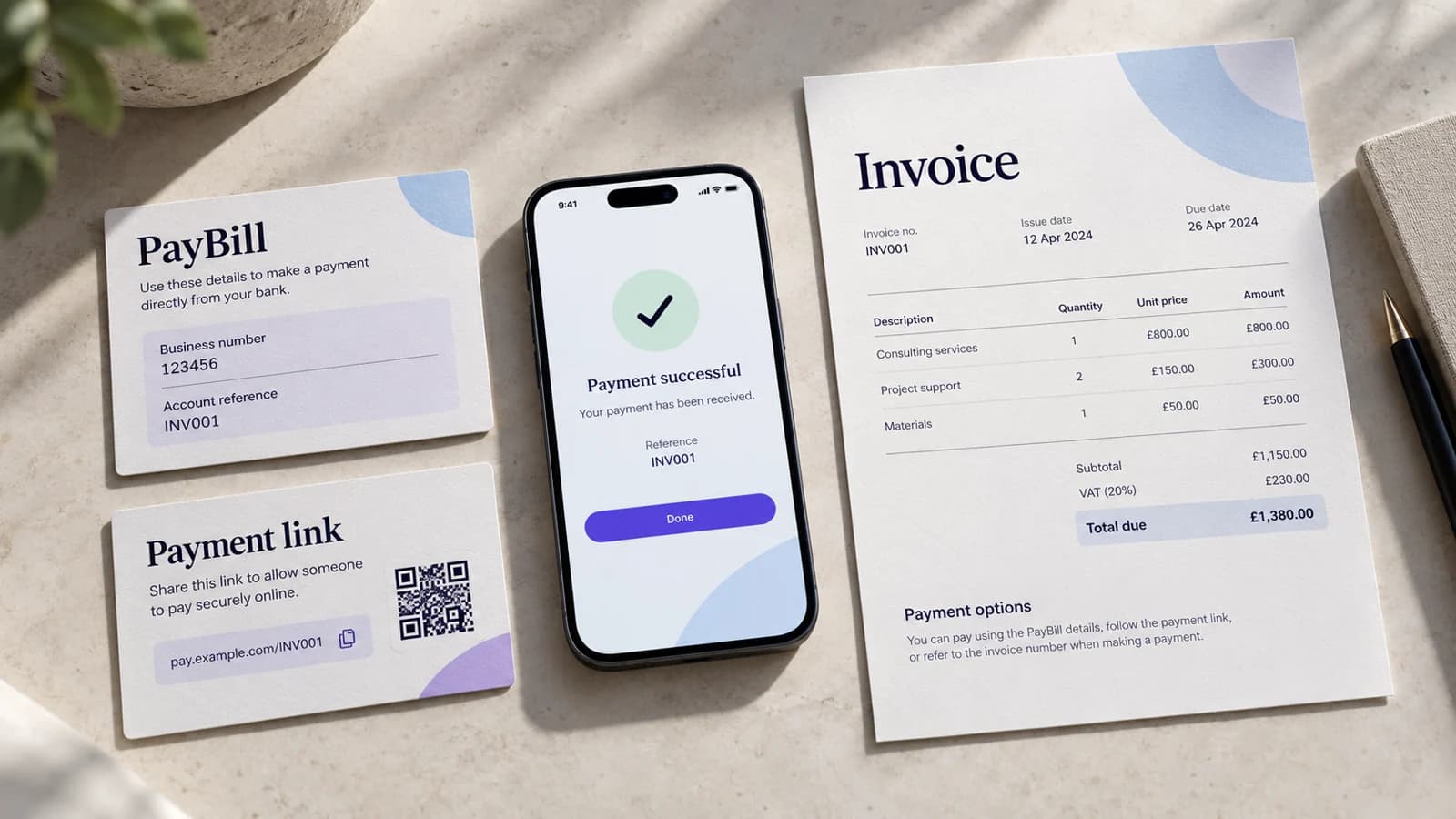
If a PayBill, Till, payment link or simple checkout already solves the real problem, adding more software can create cost and complexity without removing meaningful work.
A simple collection tool is often enough when
- you have a small number of repeat customers;
- payments are easy to match manually;
- payment status does not control service access;
- late payments are rare and can be followed up manually;
- you do not need multiple wallets or PSPs;
- month-end reconciliation is still straightforward.
In that situation, the best system may be the one you already have.
Example: a consultant with 12 monthly retainers
A consultant who invoices 12 clients each month may be perfectly well served by invoices, a PayBill or bank account, and a lightweight receivables tracker. The client base is small enough that exceptions are obvious.
The recurring nature of the revenue does not automatically justify a recurring-payment platform.
Example: a gym with 600 monthly members
The same tools behave differently at larger recurring volume. The gym now needs to know who is due today, who already paid, which transaction belongs to which member, which memberships are frozen, who needs a reminder and whose access should change.
At that point the work around the payment can cost more than initiating the payment itself.
The threshold is operational, not a magic customer count
A business with 80 complex accounts may need more structure than one with 500 simple payments.
Look for recurring operational pain rather than a universal company-size rule.
Signs you have outgrown basic collection
- Staff regularly search provider statements to answer customer questions.
- Paid customers still receive reminders.
- The same invoice can accidentally be collected twice.
- Payment uncertainty blocks service or account decisions.
- More than one payment method creates separate spreadsheets or dashboards.
- Finance spends significant time matching transactions to customers and periods.
- The business needs a repeatable recovery policy after non-payment.
What to add before buying a full platform
You can often extend the useful life of simple tools by standardizing customer IDs, payment references, invoice statuses and reminder rules.
If those controls remove the problem, stop there.
When recurring-payment software becomes the better fit
The stronger case appears when the business needs one operating model for obligations, payment attempts, unresolved states, recovery, service consequences and reconciliation.
The separate buyer guide explains how to evaluate products once you reach that point. This article answers the earlier question: whether you need one at all.