PayBill
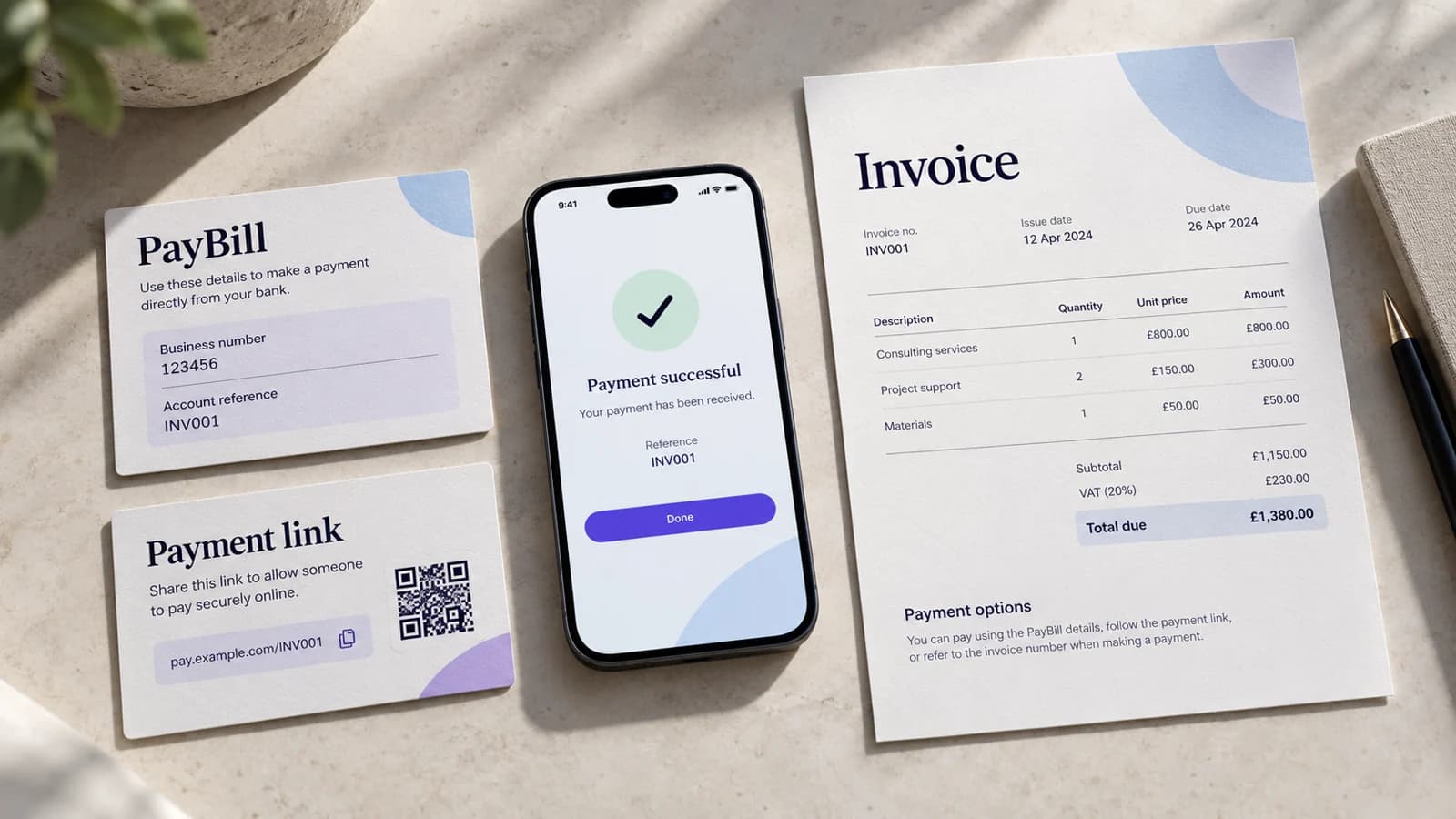
An M-PESA business payment route where the customer enters a PayBill/business number, an account/reference and the amount. The reference can help the merchant match the payment to a customer or invoice.
Till / Buy Goods
A merchant payment route designed for paying a business, often without the same account-reference pattern used by PayBill.
STK Push / M-PESA Express
A merchant-initiated M-PESA payment request sent to the customer's phone. The customer approves the payment in the M-PESA-controlled flow.
Payment link
A URL that takes the customer to a payment page or checkout. It is a delivery mechanism, not a substitute for invoice or billing state.
Invoice
The commercial record of what the customer owes for a particular purchase or billing period.
Payment attempt
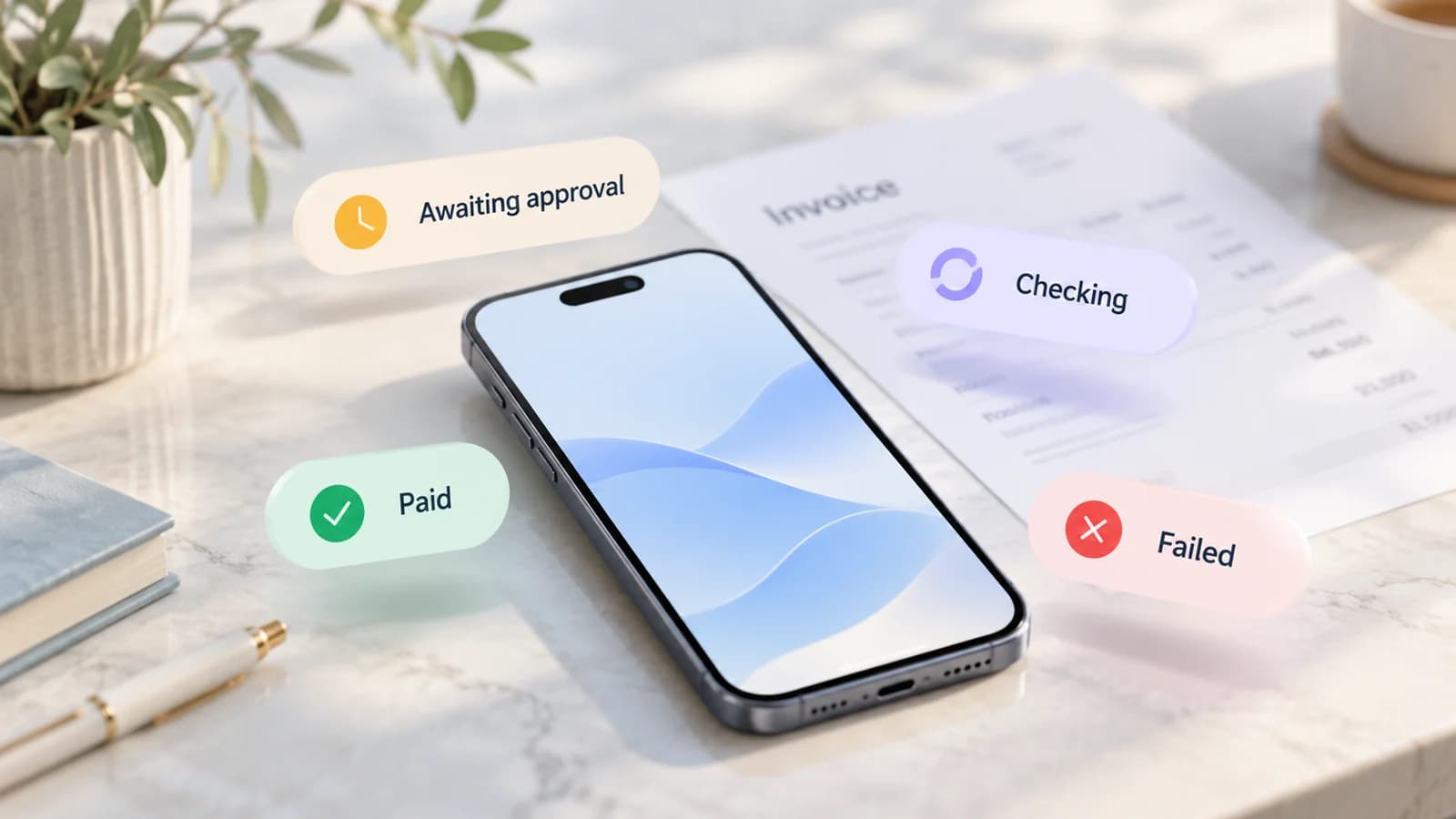
One specific effort to satisfy an invoice through a payment method. One invoice can have several attempts.
Why the distinctions matter
A PayBill, payment link and STK Push are payment paths. The invoice is the commercial record. Recurring billing becomes cleaner when the business does not use one transaction as a substitute for the other.
For the detailed M-PESA mechanics — C2B, STK Push, status queries and transaction status — use the M-PESA recurring-business-payments guide.
A worked example
A gym creates a November invoice for KES 4,000. The customer can pay manually to a PayBill using a member number, open a payment link that carries the invoice context, or choose M-PESA Express and approve an STK prompt. Those are three payment paths to the same invoice.
If the first STK request expires and the customer later pays through PayBill, the November invoice closes once. The expired STK request remains in the attempt history; it does not become another invoice.
How the terms connect
- Invoice: what is due.
- Payment link: how the customer reaches a checkout/payment path.
- STK Push: one M-PESA initiation/authorization flow.
- PayBill: one merchant collection route that can carry an account reference.
Keeping those roles separate makes support conversations much clearer: staff can ask which invoice the customer was paying and which payment path they used.