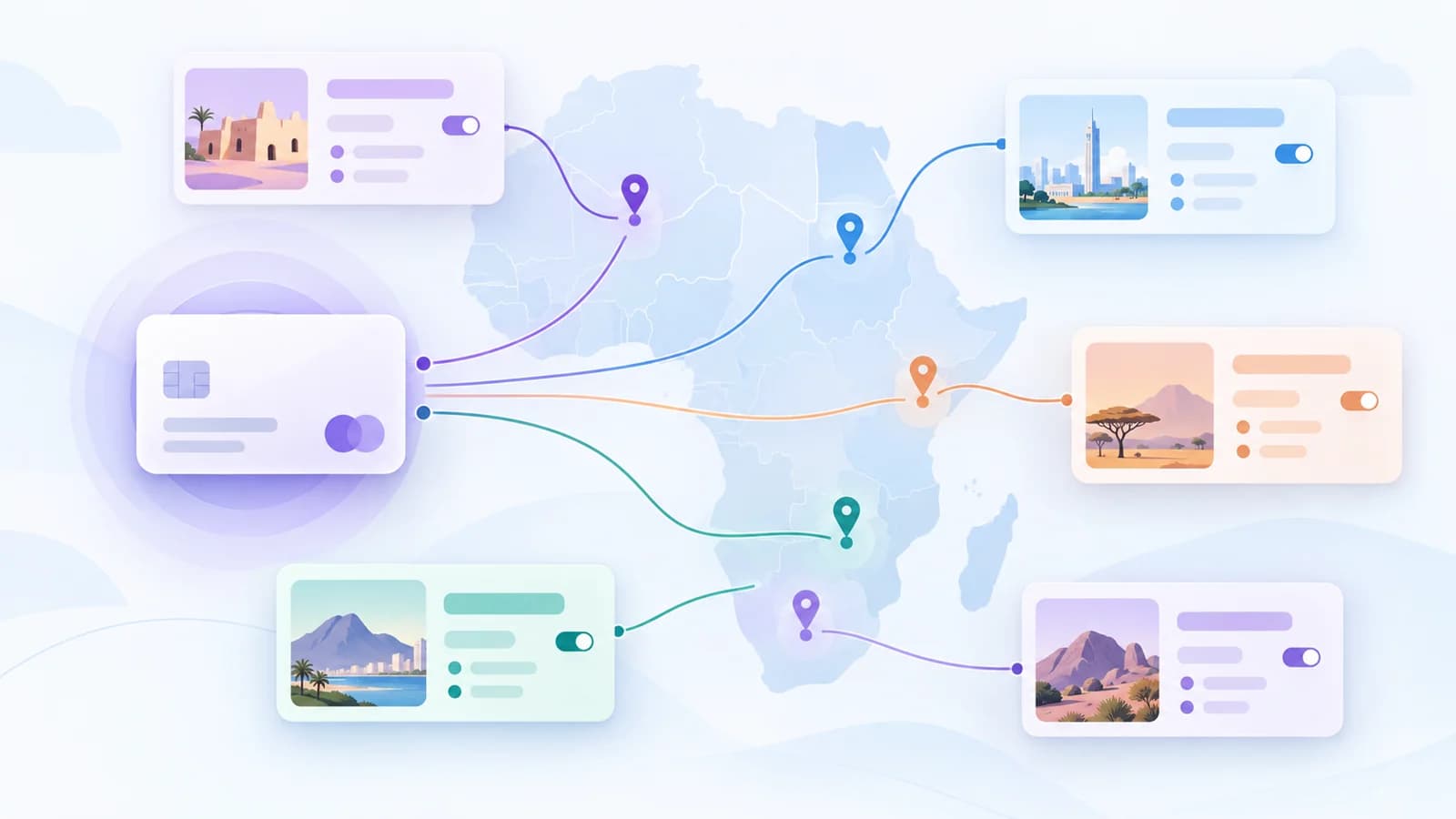
There is no single “African payment method.” A SaaS company entering multiple markets should decide payment access country by country, then keep the subscription and invoice model stable above those local rails.
Kenya
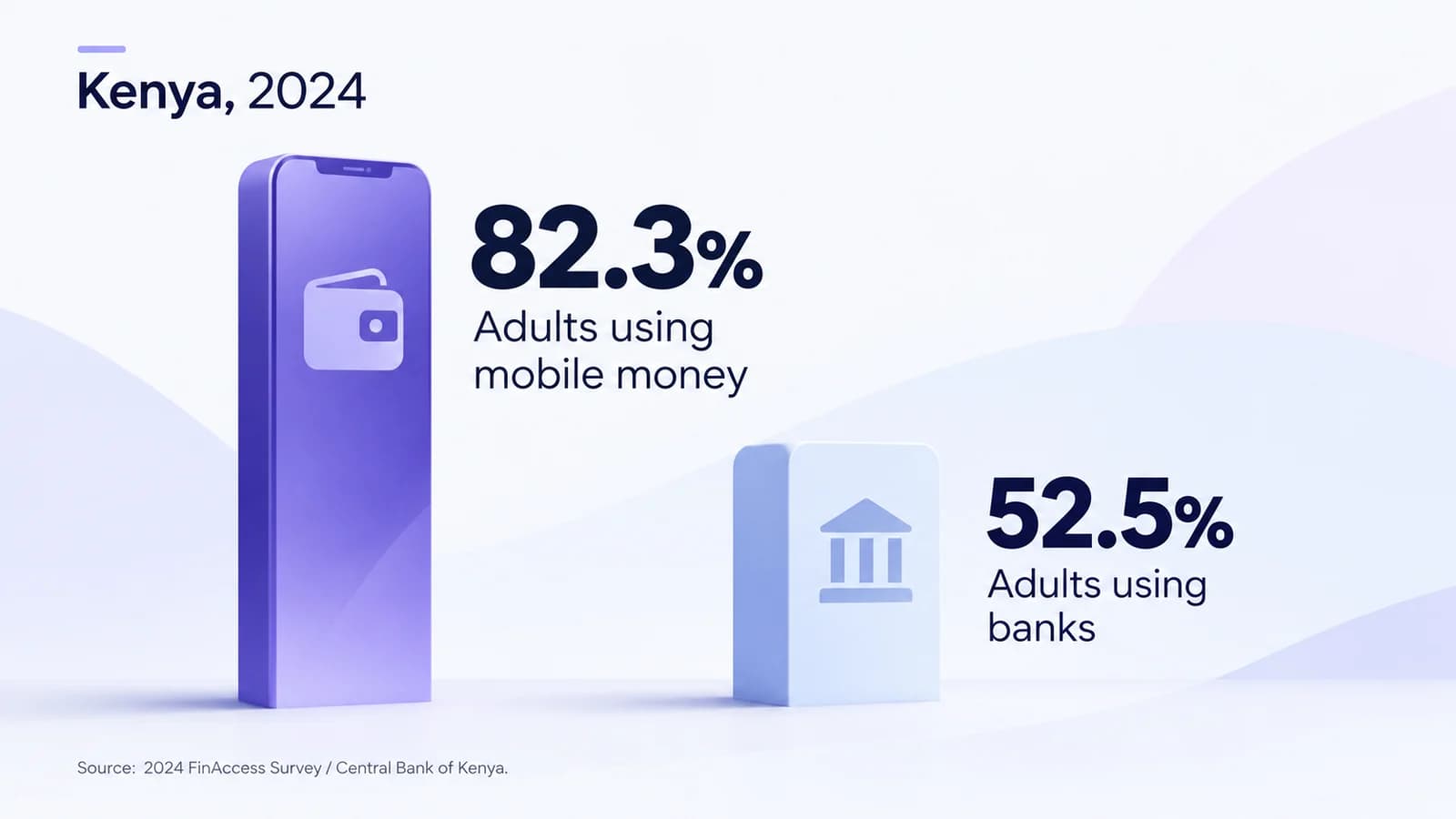
Representative methods: cards, M-PESA, Airtel Money and bank-based routes depending on PSP and merchant approval.
Paystack's current payment-channel documentation lists M-PESA and Airtel Money mobile-money support in Kenya. Flutterwave's Kenya onboarding page lists card and MoMo collections, including M-PESA and Airtel Money, for eligible Kenyan businesses.
Uganda
Representative methods: cards, MTN MoMo, Airtel Money and bank transfer routes depending on provider.
MTN Uganda operates MoMo merchant payments, while Airtel Uganda supports Airtel Money payments. PSP coverage and merchant onboarding should still be checked separately.
Tanzania
Representative methods: cards, mobile money and bank routes. Vodacom Tanzania operates M-PESA merchant payments; Airtel Tanzania operates Airtel Money and business PayBill services.
Do not assume a Kenya M-PESA integration can simply be reused with Tanzanian credentials or merchant terms.
Rwanda
Representative methods include cards, MTN MoMo and Airtel Money where supported by the merchant's provider. Flutterwave's public mobile-money coverage lists MTN and Airtel for Rwanda.
Ghana
Representative methods include cards, MTN MoMo, Telecel Cash and other provider-supported mobile-money routes. Paystack lists MTN, Telecel and ATMoney/Airtel Money provider codes for Ghana.
Nigeria
The payment mix is more bank- and card-heavy than the East African examples above. Common PSP channels include cards, bank account/transfer and USSD, with the exact set depending on merchant and provider.
Use this as a discovery map, not a launch checklist
A PSP listing a payment method does not prove your merchant account is approved for it.
- Confirm merchant eligibility.
- Confirm production enablement.
- Confirm settlement currency and account requirements.
- Confirm customer authorization behavior.
- Confirm refund/reversal mechanics.
- Confirm provider-specific limits and fees.
Keep SaaS billing above the local rails
Plans, trials, proration, invoice state and entitlement policy should not be rebuilt for each payment method. Each local rail should satisfy the same invoice model through a country-scoped payment adapter.
Choose the first local method by customer need, not regional popularity
A country can have several meaningful payment methods, but a SaaS company does not need to launch every one on day one. Start with the methods relevant to the target customer segment and the routes the chosen PSP can actually enable for the merchant.
Keep a market capability matrix
For each country, record currency, payment method, provider route, merchant eligibility, customer authorization model, refund support and settlement requirements. That matrix should be based on merchant-specific onboarding evidence, not only provider marketing pages.
The product can then expose only methods that are live while the commercial subscription model remains unchanged.
Sources
Paystack payment channels: https://paystack.com/docs/payments/payment-channels/
Flutterwave mobile-money coverage: https://flutterwave.com/mw/support/payment-methods/pay-with-mobile-money
Flutterwave Kenya onboarding and collection methods: https://flutterwave.com/us/support/onboarding/onboarding-requirements-for-using-flutterwave-in-kenya
MTN Uganda merchant payments: https://www.mtn.co.ug/momo/merchant/
Vodacom Tanzania merchant payments: https://vodacom.co.tz/lipa-kwa-simu
Airtel Africa Developer Portal: https://developers.airtel.africa/