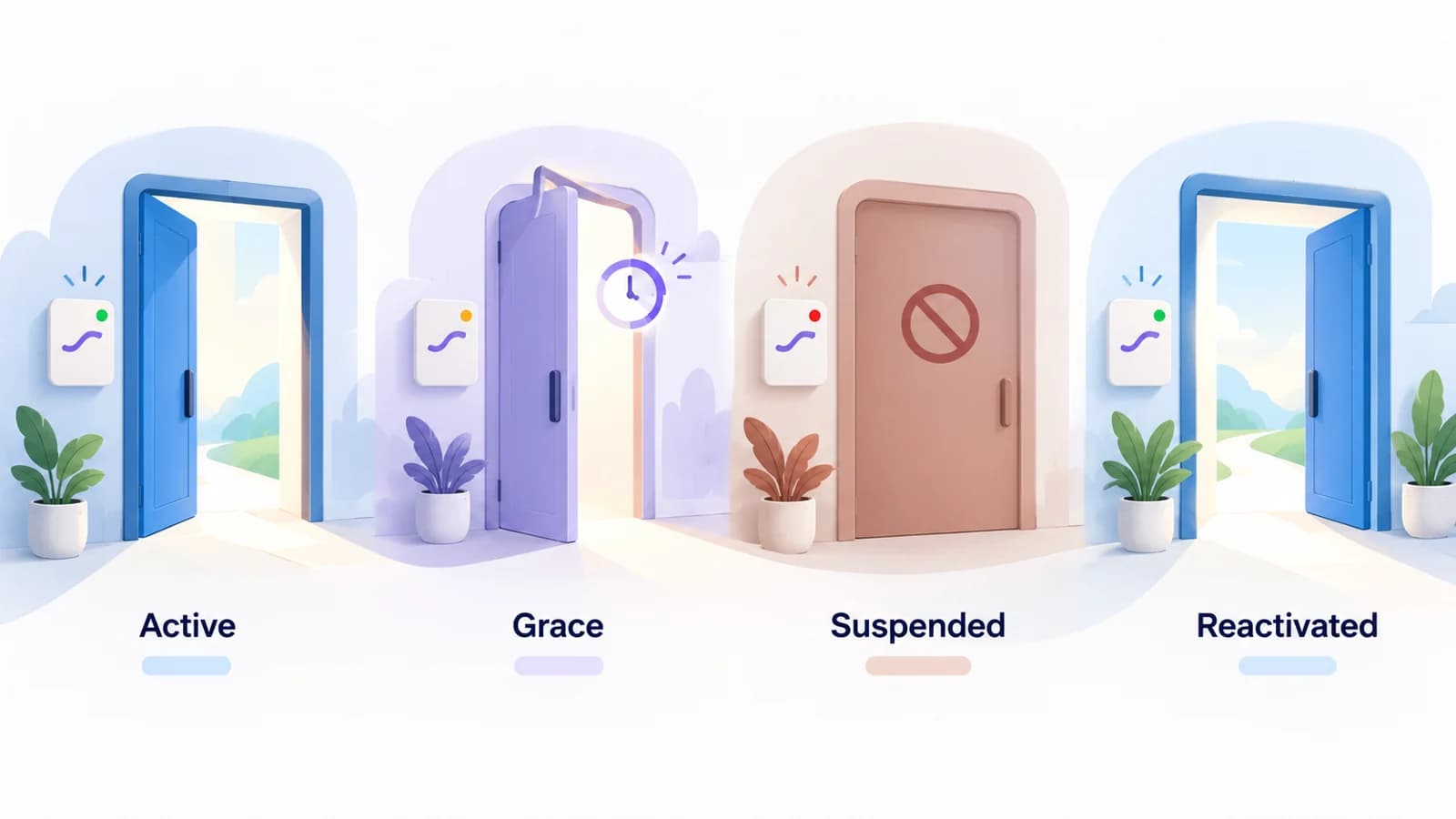
Dunning is the process for what happens after a recurring invoice remains unpaid
A customer misses a renewal, a card fails or a mobile-money request expires. The business still has an unpaid invoice. Dunning is the structured recovery process that decides what happens next.
A dunning process can include
- pre-due and overdue reminders;
- safe payment retries;
- alternative payment methods;
- grace periods;
- service or account consequences;
- manual escalation.
Dunning is not the same as sending reminders
A reminder is one action. Dunning is the policy that decides which action is appropriate based on invoice state, payment history and merchant rules.
Why payment state matters
A final failed payment can be eligible for another attempt. An unresolved payment should usually block retry. A paid invoice should stop the entire sequence.
That is why a mature dunning engine is state-aware rather than date-only.
How mobile money changes dunning
Card recovery often assumes the merchant can retry a stored credential. Mobile-money recovery may require the customer to authorize the next attempt.
The dunning engine can still automate timing, reminders, retry eligibility and wallet fallback while preserving the customer authorization required by the rail.
Dunning and debt collection are not automatically the same thing
For many subscription businesses, dunning is simply failed-payment recovery while the service relationship is still active or in grace. Formal debt collection can carry different legal and operational implications.
Useful dunning metrics
- Share of invoices entering dunning.
- Recovery rate.
- Time to recovery.
- Attempts and reminders per recovered invoice.
- Manual touches.
- Customer complaints.
A global benchmark, carefully scoped
Stripe's dunning guide explains how failed payments contribute to subscription churn. Separately, Stripe's Billing features page reports that its Smart Retries have helped businesses recover an average of 57% of recurring payments that originally failed.
Those are global, card-heavy Stripe benchmarks. They should not be presented as Kenyan mobile-money recovery performance.
For policy design, go deeper than the definition
For implementation, the configurable dunning-policy guide covers timing, channel order, retry limits, wallet fallback, grace, suspension and reactivation.
Dunning should stop when the obligation stops
A dunning sequence should be re-evaluated before each action. Payment, cancellation, waiver, an external payment or a support hold can all remove the reason to keep contacting the customer.
That makes dunning a state-driven process rather than a fixed list of messages sent regardless of what happened after the first failure.
Sources
- Stripe dunning guide, updated 13 April 2026: https://stripe.com/resources/more/dunning-what-subscription-based-businesses-need-to-know
- Stripe Billing Revenue Recovery: https://stripe.com/billing/features