Property managers often collect rent through M-PESA or bank transfer already. The difficult part is keeping rent, deposits, service charges and partial payments attached to the right tenant and period.
Keep rent separate from one-off property charges
Security deposits, repair charges, utilities and service charges should not silently become part of the recurring rent amount.
A tenant statement should show which balance each payment is settling.
Partial payments need an allocation rule
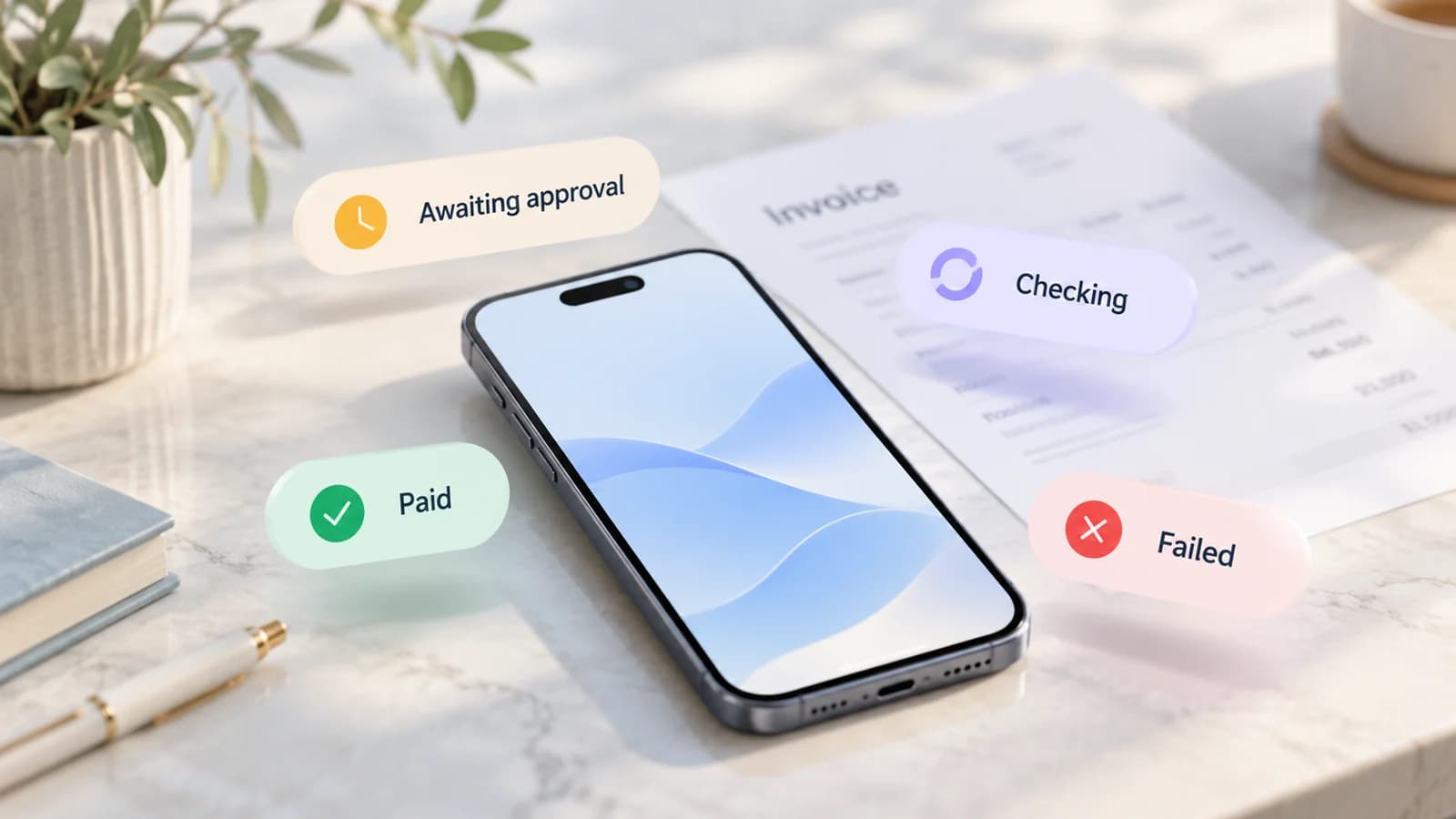
If monthly rent is KES 30,000 and the tenant pays KES 20,000, the invoice should become Partially Paid with KES 10,000 still due, not Paid and not a second invoice.
Use stable tenant and unit references
A property reference should distinguish the tenant/account and, where useful, the unit. Do not rely only on the payer's phone number because someone else may pay on the tenant's behalf.
Recovery should follow the tenancy policy
Reminder timing, grace and escalation depend on the lease and the property manager's process. Payment software should enforce the configured policy, not invent one universal rent-collection schedule.
Month-end should produce a rent roll, not a screenshot folder
Finance should be able to see rent due, amount collected, partial balances, unmatched payments and exceptions by property and tenant.
Rent collection needs a balance, not just a paid/not-paid flag
A tenant account can have current rent, arrears, service charge, utility recovery and a deposit history at the same time. The monthly rent invoice should therefore expose the opening balance, new charges, payments allocated during the period and the closing balance.
That makes partial payment understandable. If a tenant pays KES 20,000 against KES 30,000 rent, the system should show a KES 10,000 rent balance rather than create a second unrelated charge.
Decide how money is allocated
Property managers need an explicit rule for payments that are lower than the outstanding balance. Some allocate oldest rent first; others allow the payer to identify the month or charge. Whatever the policy, preserve the original payment reference and the allocation decision separately so finance can explain the ledger later.
Separate the deposit ledger
A security deposit is not ordinary monthly revenue. Keep it distinguishable from rent and service charges so a later refund, deduction or transfer is not confused with a rental payment.
What a property manager should see
- rent due this month by property and unit;
- partial balances and arrears;
- unmatched or wrong-reference payments;
- tenants under an agreed payment plan;
- service-charge balances separated from rent;
- payments received but not yet reconciled.
The collection tool is most useful when it reduces time spent explaining tenant ledgers, not merely when it sends another reminder.
Make tenant statements reproducible
A tenant and property manager should be able to reach the same closing balance from the same charges and payments. Manual adjustments should therefore carry a reason, date and staff identity instead of silently editing the balance.