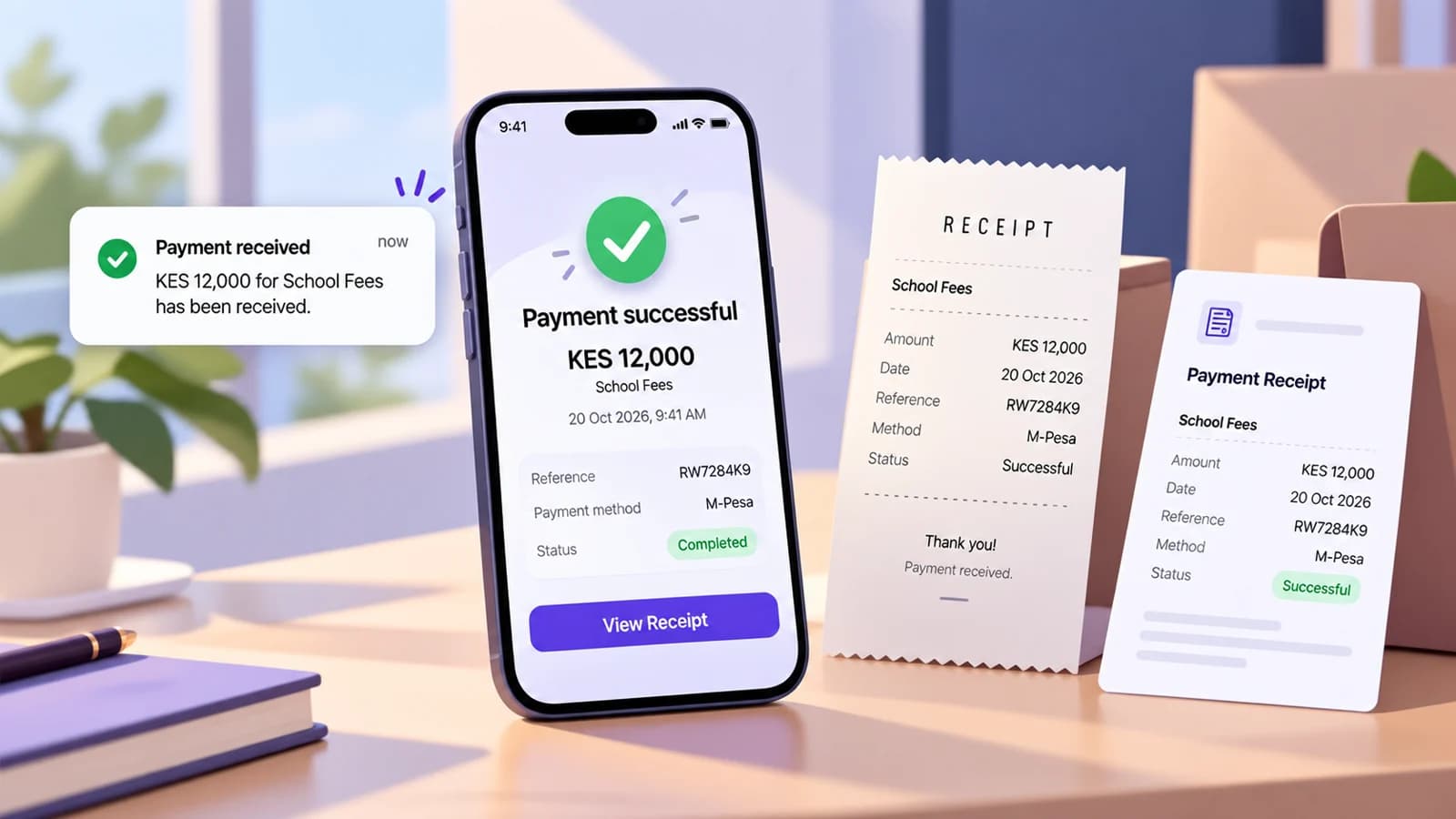
A payment confirmation should answer the customer's immediate question: did the business receive and recognize this payment? A receipt should preserve the evidence needed later.
Confirm only after sufficient payment evidence
Do not send a paid confirmation merely because a payment request was accepted or because a payment link was opened.
Confirm after the provider result has been matched to the correct invoice or obligation.
What a customer receipt should include
- Merchant name.
- Amount and currency.
- What the payment settled: invoice, membership, period or account.
- Payment date/time.
- Merchant receipt or invoice reference.
- Provider transaction reference where appropriate.
Do not confuse a payment receipt with a tax invoice
A provider payment confirmation proves the transaction. It does not automatically replace the merchant's invoicing and tax-compliance obligations.
In Kenya, KRA states that persons engaged in business are generally required to onboard eTIMS and issue electronic tax invoices, subject to the applicable rules and exceptions. The merchant should keep payment confirmation and tax invoicing connected but conceptually separate.
Receipts should close the customer loop
Once payment is confirmed, reminders stop, the invoice becomes paid, and any permitted service or membership update can run.
Confirmation, receipt and reconciliation are three different moments
Payment confirmation tells the customer that the merchant has accepted the payment as satisfying the invoice. A receipt gives the customer a durable record. Reconciliation is the finance process that proves the invoice, provider transaction and downstream records agree.
Those moments can happen close together, but they should not be collapsed into one status.
Design for duplicate and corrected receipts
If two successful transactions hit the same invoice, do not issue two ordinary “invoice paid” confirmations. Keep the second transaction as a duplicate-payment exception and tell the customer what the merchant will do next under its refund or credit policy.
If a receipt needs correction because the invoice reference or customer name was wrong, preserve the original transaction reference and record the correction rather than deleting the evidence.
Make receipts useful to support
- Let the customer quote a merchant receipt or invoice number.
- Keep the provider reference searchable by staff.
- Show the billing period or service the payment covered.
- Do not expose unnecessary customer or provider metadata.
A good receipt reduces the number of “did you receive my payment?” conversations because both sides can refer to the same commercial record.
Source
KRA eTIMS overview: https://www.kra.go.ke/online-services/etims