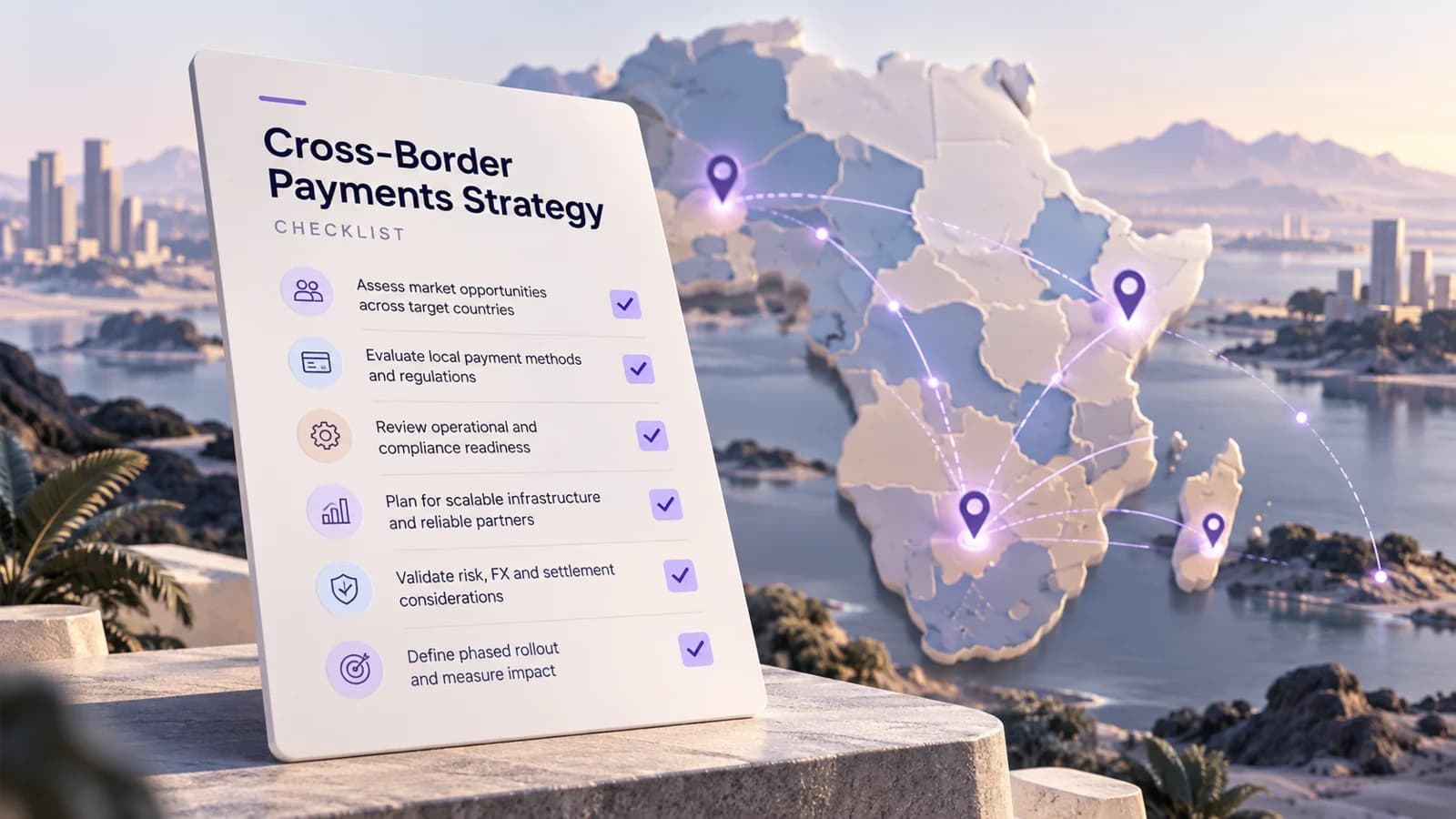
Regional expansion should add country configuration and provider adapters, not fork the merchant's billing system.
Commercial and onboarding
- Merchant entity eligible for the target country/provider.
- Required KYC/KYB documents confirmed.
- Settlement account country and currency confirmed.
- Fees and taxes documented.
Payment capability
- Exact wallets or rails enabled for this merchant.
- Customer authorization flow understood.
- Refund or reversal capability verified.
- Limits and unsupported cases documented.
Technical integration
- Country-scoped merchant credentials.
- Request identifiers stored.
- Callbacks and status queries implemented.
- Raw provider state mapped into normalized state.
- Idempotency and duplicate-success handling tested.
Billing and recovery
- Same invoice model used across countries.
- Local payment methods attach as attempts rather than new billing objects.
- Retry and grace policies reviewed for the market and product.
Finance
- Provider references preserved.
- Reconciliation reports mapped to the common ledger.
- Settlement evidence and exceptions have owners.
Launch test cases
- Successful payment.
- Customer cancellation.
- Missing callback or unresolved result.
- Retry after final failure.
- Payment through another accepted route.
- Duplicate provider event and duplicate successful payment.
The checklist is deliberately provider-neutral. The country pages and provider-specific guides should hold the market-specific details.
Add a market-readiness gate
Before engineering marks a country as available, require evidence for both technical and commercial readiness. Sandbox success is not enough if merchant onboarding, settlement or refunds are still unresolved.
- Commercial gate: merchant entity, contract, KYC/KYB and settlement confirmed.
- Technical gate: production credentials, callbacks/status queries and error handling tested.
- Operations gate: support playbook, exception routing and reconciliation export ready.
- Product gate: checkout copy, currency, payment-method availability and service policy reviewed.
Version country capability
Provider capability changes over time. Keep a dated record of which methods and actions were enabled for each merchant route rather than relying on a global spreadsheet that silently changes.
Run the same failure suite everywhere
A regional product should test the same business invariants in every country: an unresolved attempt blocks unsafe retry, a paid invoice stops collection, duplicate events do not duplicate effects, and reconciliation preserves provider evidence.
The raw provider responses can differ. The merchant-facing guarantees should remain stable.
Plan the rollback
If a new provider route behaves incorrectly in production, the team should be able to disable that capability for the country without corrupting invoices already in progress. Feature flags and country-scoped configuration make that possible.
Document unsupported cases
A launch checklist should also say what the market integration cannot do yet — for example an unavailable refund path or unsupported currency. Explicit gaps are safer than assuming every feature on the regional product works in every country.